Commercial Heat Pump Solutions

Heat pumps offer an efficient, all-electric alternative to traditional HVAC systems—perfect for organizations looking to reduce energy use, lower operating costs, and align with sustainability goals. Whether retrofitting older systems or designing new, Inovis delivers expert implementation across multi-unit residential, commercial, industrial, and municipal facilities.

Table of Contents

Bring Clean Comfort to Your Building

Switching to heat pumps can help you achieve your energy and climate goals—without sacrificing performance. Let’s explore how heat pumps can work for your facility.

Heat Pumps Solutions - Inovis Energy

What is a Heat Pump?

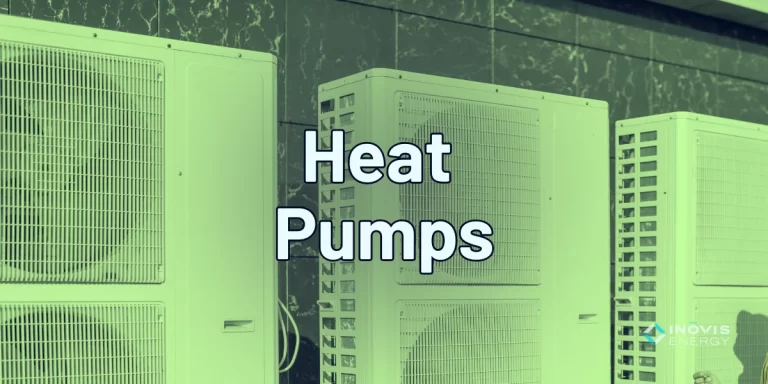
Heat pumps are highly efficient HVAC systems that transfer heat rather than generate it, providing both heating and cooling through a single system. Using electricity, they move heat from one space to another, making them a powerful tool for decarbonization and electrification. Commercial-grade heat pumps can serve large facilities, zoned systems, or even multi-building campuses. Their performance can be further optimized when paired with advanced controls or renewable energy systems.

Benefits of Commercial Heat Pump Systems

  • Reduce reliance on fossil fuels and lower GHG emissions

  • Provide both heating and cooling in one system

  • Lower operational and maintenance costs

  • Increase energy efficiency by up to 50% compared to legacy systems

  • Qualify for rebates and incentives in most states

  • Support decarbonization, electrification, and ESG goals

  • Compatible with zoning and building automation systems

How Heat Pumps Work

Heat pumps operate on a simple yet effective principle: instead of generating heat, they move heat from one place to another. This innovative technology comes in several varieties, including air-source, ground-source, and water-source heat pumps. They can be deployed as centralized rooftop units, split systems, or part of a multi-zone VRF setup.

Air-Source Heat Pumps

Draw heat from the ambient air. They extract heat from the outside air in the winter and move it inside. Conversely, in the summer, they extract heat from the inside air and release it outside, thus cooling your facility.

Ground-Source or Geothermal Heat Pumps

Take advantage of the constant temperature of the earth below the frost line. They transfer heat between your facility and the ground or a nearby water source. Despite higher upfront costs, geothermal heat pumps have low operating costs and are incredibly efficient.

Water-Source Heat Pumps

Use bodies of water, like a lake or pond, as a heat exchange medium. They are efficient systems suitable for facilities located near sufficient water sources.


Industries That Benefit from Heat Pumps

Related Facilities

Heat pump retrofits and upgrades are ideal for:

  • K-12 and higher education campuses

  • Office parks and municipal buildings

  • Dormitories and housing authorities

  • Healthcare centers and clinics

  • Commercial buildings undergoing decarbonization

Our Heat Pump Installation Process

  • Site Assessment – Analyze building load, zoning, and distribution

  • System Design – Choose appropriate heat pump type and capacity

  • Rebate Modeling – Identify incentives to offset costs

  • Installation – Coordinate with existing HVAC or perform full replacement

  • Commissioning – Test and verify performance

  • Ongoing Support – Provide training, warranty, and long-term maintenance

Incentives & Financing for Heat Pumps

Many utility programs offer substantial rebates for replacing conventional HVAC systems with heat pumps. Inovis works with your local utility or energy provider to secure these incentives on your behalf. Additional financing options include:

  • Zero-down capital lease

  • Performance-based contracting

  • On-bill financing

  • Energy-as-a-Service models

Bring Clean Comfort to Your Building

Switching to heat pumps can help you achieve your energy and climate goals—without sacrificing performance. Let’s explore how heat pumps can work for your facility.